Computing Curriculum Review

iCompute already has it covered!

Computing curriculum reform

The Curriculum and Assessment Review recently published its final report, Building a world-class curriculum for all(November 2025), alongside the Government’s response.

For Computing, the message is simple: the curriculum needs updating so pupils develop the knowledge and confidence to fully participate in the digital world — and to use technologies safely, creatively and effectively.

Artificial Intelligence is a significant part of that, and it isn’t something schools will be able to ignore.

At iCompute, we are proud to be the first ever scheme of work that both teaches about AI and uses AI as part of learning computing across all Key Stages. That pioneering spirit is central to everything we do. For over a decade, thousands of teachers have trusted iCompute because of our expertise and innovation in computer science education.

We are always ahead of the curve – anticipating change and embracing new technologies that make teaching and learning richer and more relevant.


Digital literacy is key

The curriculum review highlights that digital literacy is not just “being good at using devices”. Digital literacy includes the skills, behaviors, and confidence needed to use technology creatively, safely, and effectively. It also invoves making informed decisions about the implications, risks, and impacts of digital technology. Being digitally literate helps children adapt, and do well in the modern world, use technology responsibly, and actively participate in learning across all subjects.

The review also makes clear that schools should not assume children will develop these skills automatically. Advances in AI and generative AI have made digital literacy even more critical.

Computing is expected to remain the main subject responsible for delivering this.


Artificial Intelligence has changed the digital world

The Review states that recent developments in AI and generative AI make digital literacy even more important. While the long-term impact of AI remains uncertain, children should understand how it works, its capabilities, strengths and its limitations.

The revised Programme of Study is set to explicitly incorporate AI.


What we’re already doing

At iCompute, we have been teaching the skills described in the Review for years.

Digital literacy is already built into our curriculum

This includes safe use of technology, critical thinking, online responsibility and practical digital skills.

AI is already taught across the primary phase

We already teach three separate six-week AI units, and have more to come. These are throughout the primary phase:

  • KS1
  • Lower KS2
  • Upper KS2

This means pupils revisit the topic in an age-appropriate way, building understanding as they mature.


Start teaching a computing curriculum fit for today, now

Schools shouldn’t have to wait until 2028. The Government’s timeline is sensible for national reform, but schools can’t pause their children’s education until the refreshed curriculum arrives. AI is already shaping how children search, learn, communicate, and decide what to trust online. That is why the Review is right to highlight digital literacy and AI as essential areas for Computing.

At iCompute, we agree — and thats why we’re already delivering it.


Sign up for a freel trial at icompute-uk.com to see how iCompute can help you teach the revised computing curriculum like a specialist.

Planning Computing

How to plan a Primary Computing Scheme of Work
iCompute Primary Computing Scheme

Primary Computing Scheme

Many teachers are tasked with planning computing schemes of work for their schools.

Having produced many for iCompute, I know how huge and time consuming the task is.  Here I share my tips about how to plan a computing scheme of work which ensures your school has a broad, balanced, rich and progressive scheme of work that will engage and challenge pupils of all abilities.
computing progression

  1. Use free software and tools – you don’t need to buy a thing in order to meet the objectives of the computing curriculum
  2. Practice – helps you understand the knowledge, skills and understanding the software and tools help develop
  3. Look for progression – you will start to see that particular tools are suitable for specific age groups
  4. Look for full coverage – Computing is not just about coding
  5. Understand how to assess computing – know where your pupils are and where they need to go next
  6. Adapt – make it fit your school, staff and needs of your pupils

Read on to find out more about each stage … Continue reading

Digital Literacy and Primary Blogging

Developing Digital Literacy by Blogging with Primary Children

primary blogging

A Powerful Tool for Developing Digital Literacy

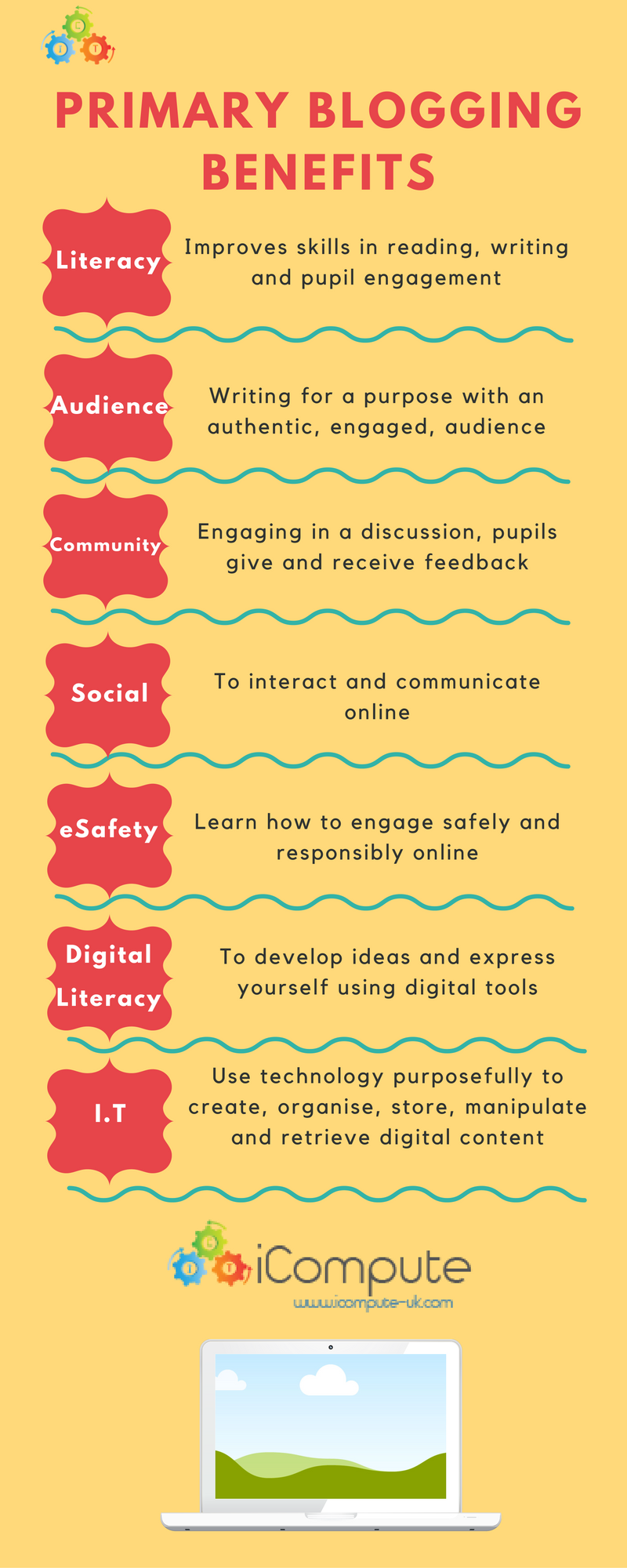
Blogging is a powerful tool for developing digital literacy in primary schools. It provides a responsive community-driven environment that gives pupil’s writing a voice, an audience and a platform.  When children share their world and their thoughts through writing, they understand how connected people are. They learn from each other, challenge one other, question and receive feedback.

My pupils love blogging and I often use it as a way to engage my reluctant writers.  See below some of the comments the children wrote about blogging in my classes.

love-conversation-1

blog-comment

When pupils know they have a genuine audience for their writing, especially when its other children, I see both an increase in motivation and in product; which in turn helps me more accurately assess their work.

To help other schools introduce primary blogging into their classrooms, I’ve developed six new units for iCompute primary computing scheme of work.  iBlog contains step-by-step primary blogging lesson plans and associated resources.  Existing iCompute Online schools have access to all new units at no additional cost.

I’ve also put together a free infographic about the benefits of blogging with primary children that you can download here.

primary blogging

Click to download

Primary Computing and Digital Literacy

Digital Literacy in Primary Schools

Digital Literacy

Teaching Digital Literacy

Now that Computing has been statutory in primary schools since the introduction of the National Curriculum for Computing at Key Stage 1 and Key Stage 2 in 2014, many schools feel that they have got to grips with the objectives and have a view, if not a plan, of how to meet them.  With computer science being at the core of the curriculum, its perhaps easy for schools to neglect the other aspects of it – including digital literacy.

Continue reading